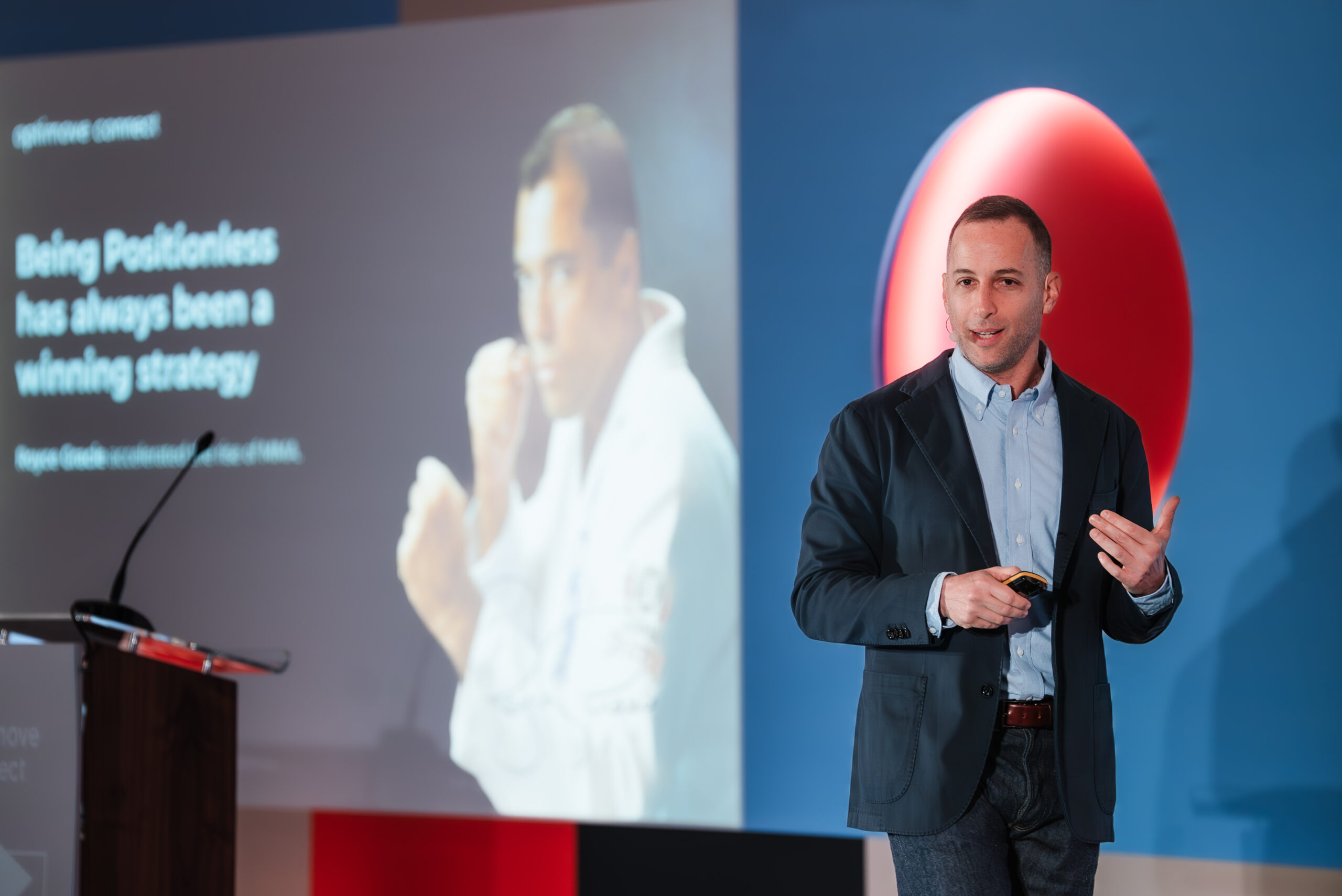
“Being positionless has always been a winning strategy.” These were the words Pini Yakuel, CEO and Founder of Optimove, used to open the conference I attended in London this week. He talked about Nikola Jokić, the best basketball player in the world, Johan Cruyff, and Royce Gracie, people who redefined the rules of the game and never let themselves be confined to a single role. I could relate to every story he told. Because being positionless isn’t just a sports strategy. It’s a mindset that can shape your entire career.
My Journey: From Customer Care to Business Strategy
Fifteen years ago, I was about to graduate in Marketing when I landed my first job at KiloStop, a nutrition clinic that matched my values and was the biggest in Romania. I started in Customer Care, eager to learn and contribute. But curiosity and adaptability led me forward. Within six months, I transitioned into sales, where I quickly became a coordinator. Two years later, I joined the marketing team as a specialist, and after another two years, I was leading the entire department for a company with a turnover of over €1.5 million.
Looking back, my progress was never about following a set career path, it was about never limiting myself to a job description. I learned by doing, by asking questions, by testing ideas, and by understanding both the big picture and the small details that make a business successful. Of course, no journey is ever just about one person. I owe a lot to Cristian Panaite, who had the courage (or, as I like to say, the madness) to entrust a multi-million euro business to a 27 year old girl. His trust pushed me beyond my limits and shaped the professional I am today.
Two years later, I made the decision to join E.ON as a marketing specialist. It wasn’t an easy decision, but life sometimes forces your hand, my father’s medical diagnosis made me realise that I needed a change. At first glance, some people saw it as a downgrade, but I saw it differently. It was an opportunity for me. I knew that to lead a team in a multinational company, I had more to learn. And I was right. Four years later, I was heading the Digital Performance Team, managing multi-million euro budgets, and experiencing a whole new level of professional growth. At E.ON, the journey is even more exciting, but the lessons I’ve learned here deserve their own story which I’ll share another time.
All these experiences taught me an important lesson: specialisation is valuable, but flexibility is what takes you to the next level.
What It Means to Be Positionless in Marketing
Every step in my career helped me develop a holistic perspective, one that allows me to see the full picture rather than focusing on just one piece of the puzzle. And in marketing, that’s essential. To thrive, you need to understand three key elements: strategy (leadership & vision), execution (team & technology) and the customer (the driving force behind every business decision).
Like Pini said, this is the true essence of being positionless, breaking the traditional work structure and becoming more than just a specialist. Think about how marketing teams often operate. Creatives wait for data. Campaign managers wait for assets. Strategists wait for performance reports. This fragmented way of working slows down progress and creates bottlenecks. But a positionless marketer sees the whole system and knows how to connect the pieces.
To do this, you need three superpowers::
🚀 The power of data – Without clear insights, every decision is just a guess. You need data-driven strategies, not just gut feelings.
🎨 The power of creativity – All the data in the world won’t help if you don’t know how to tell a compelling story that grabs attention.
⚙️ The power of optimization – Marketing is never static. The key to growth is testing, adjusting, and continuously improving.
If you lack one of these, you’ll be stuck. Without creativity, you’re just an analyst. Without data, you’re just an artist. Without optimization, you’re relying on luck.
The Customer: The Starting Point of Every Strategy
No matter how good you are at data, creativity, or optimization, one thing is certain: without deeply understanding your customer, all strategies are just theoretical exercises.
Being positionless means adapting to what your customers actually need, not just what you assume they want. It’s about knowing their motivations, decision-making processes, and how you can create real value for them.
🔍 Understand what truly motivates customers – Not everyone buys for the same reason. Some want the lowest price, others look for security, and some seek a premium experience. If you don’t know what drives them, you can’t create a message that resonates. (Tip: If you want to dive deeper into customer psychology, read “Start with Why” by Simon Sinek.)
💬 Personalize your message – Sending the same offers to your entire database doesn’t work anymore. Customers expect relevant, tailored messages. Use smart segmentation and automation to deliver personalized content.
🎯 Guide, don’t push – People don’t like being pressured into buying. They want to make informed decisions. Create content that explains the real benefits of your product, so they naturally conclude that it’s the best choice for them. “Building a StoryBrand” by Donald Miller is a fantastic book that teaches you how to craft marketing messages that guide customers instead of pushing them.
📊 Measure and improve – If you’re not analyzing your campaign results, you’re flying blind. Test, optimize, and refine your approach constantly.
Who Are the Winners of the Future?
Nikola Jokić, Johan Cruyff, and Royce Gracie became the best because they understood the full game, not just their individual roles. The same applies in marketing and business. The most successful professionals won’t be those who specialize in just one area, but those who understand how everything connects.
If you’re just a creative but don’t understand data, you have a problem. If you’re just a numbers person but can’t turn data into actionable insights, you have a problem. If you can create campaigns but don’t understand business strategy, you have a problem.
Being positionless means breaking the mold. It’s about taking initiative instead of waiting for instructions. Feeling comfortable in both strategy and execution. Seeing the big picture but also being able to get things done. The future belongs to those who can blend creativity with data, strategy with execution, and vision with adaptability. Those who know how to interact with customers in meaningful ways and deliver the right message at the right time. And most importantly, those who are always one step ahead.